
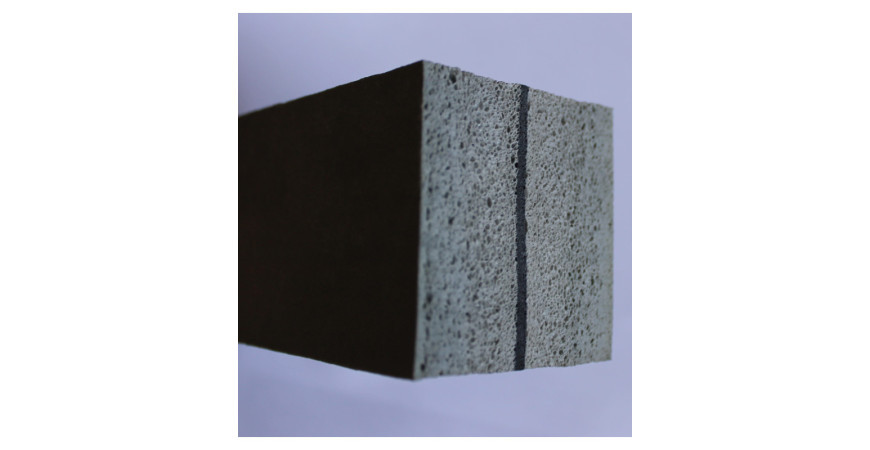
FOAM GASKETS : PERFOMANCE, SAFETY AND DURABILITY
In the demanding world of metallurgy, every lifting operation relies on the reliability and precision of the equipment. Vacuum lifters, used to handle heavy sheets, plates, or metal parts, require high-quality components.
Among them, the foam gasket plays a central role. As a specialist in heavy load lifting, Klevage offers a range of foam gaskets designed to ensure optimal grip and enhanced safety in industrial environments.
Foam Gaskets Tailored to the Demands of Metal Lifting
Foam gaskets are made from EPDM foam or closed-cell natural rubber, two materials chosen for their excellent resistance to oils, solvents, and temperature variations.
Several profiles are available depending on your needs:
- Grooved profiles (K9000, K9001, K9002): Easily inserted into the suction cup rails, ensuring proper positioning and perfect sealing.
- Adhesive gaskets (K9010): High-density grey foam with reinforced central adhesive for reliable attachment to supports.
- Skinless profiles (K9023): Flexible, ideal for rough or uneven surfaces.
These models meet all lifting needs within the metallurgy sector.
In metallurgical environments, constraints are numerous: heavy part weights, sometimes oily or uneven surfaces, heat, and repeated cycles.
Klevage’s foam gaskets effectively address these challenges with:
- Excellent sealing: Creating a stable vacuum between the suction cup and the workpiece.
- Reliable grip: Preventing accidental slipping or detachment of the load.
- Wear resistance: Materials are selected to withstand hundreds of lifting cycles.
- Surface compensation: The gaskets absorb surface irregularities for a better hold.
Common Applications in Metallurgy
These foam gaskets are used with vacuum lifters across many sectors:
- Lifting of steel, stainless steel, or aluminum sheets, concrete slabs, etc.
- Handling of parts at height or on construction sites: vacuum sealing ensures safety.
- Safety and Maintenance: A Critical Issue
A foam gasket in good condition is essential for operator safety.
A worn gasket can lead to loss of grip, or even cause the load to fall.
Klevage recommends:
- Regular visual checks: Look for cracks, compression, or loss of elasticity.
- Cleaning contact surfaces: Prevent gasket deterioration due to oil or debris.
- Preventive replacement: Based on the number of cycles or manufacturer recommendations.
- Best Installation Practices
To maximize the lifespan of your foam gaskets:
- Always install gaskets on clean, flat surfaces.
- Avoid lateral friction, which can lead to premature wear.
- Position the vacuum lifter perpendicular to the surface being lifted.
- When in storage, the spreader beam must be placed on its support feet to avoid compressing the seal.
Conclusion: Choose Klevage Quality
Selecting the right foam gasket is a key factor in the success of your lifting operations. With Klevage products, you’re guaranteed long-lasting performance, enhanced safety, and perfect compatibility with your vacuum lifters.
➡️ Contact our team now to identify the most suitable foam gasket for your needs or request a detailed technical datasheet.300*


